
The Airbnb Turnover Cleaning Guide for Cleaners
A practical, step-by-step guide to short-term-rental turnovers: the tight checkout-to-check-in window, linen strategy, restocking, staging, and host reporting.
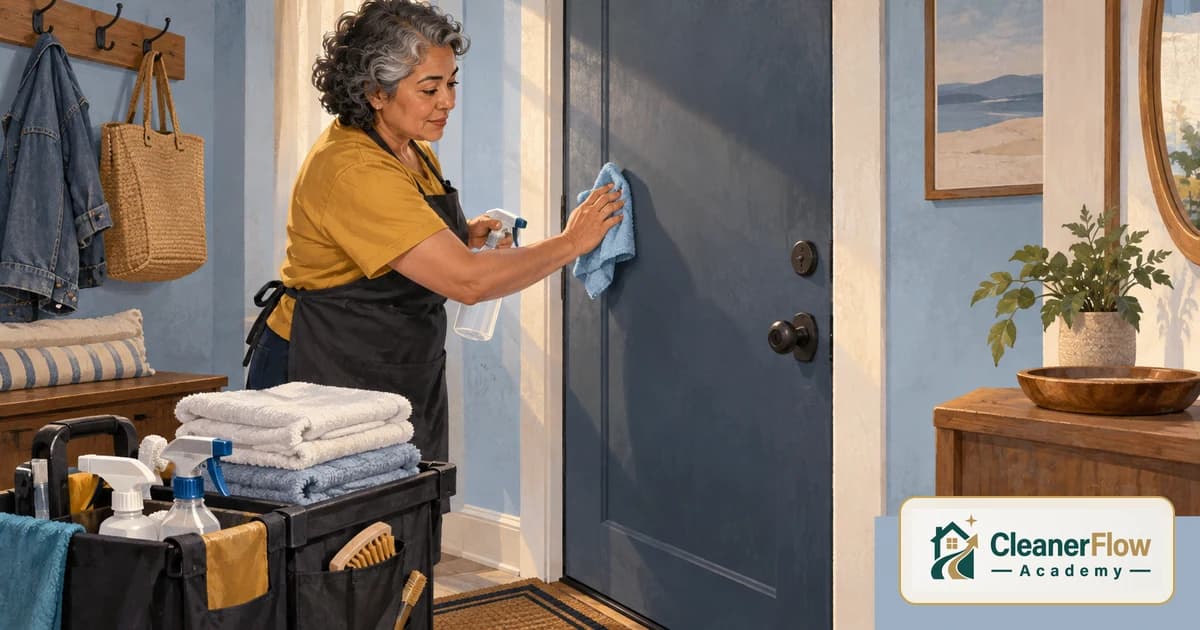
What makes a turnover different from a house cleaning
Cleaning a short-term rental is not the same job as cleaning a private home, even when the rooms look identical. In a private home you clean around the family. In a turnover you are resetting an empty stage so the next guest walks in and feels like they are the first person to ever stay there. Nobody is there to explain where things go, and there is almost never a second chance before the review is written.
The two things that define the work are time and consistency. Most turnovers happen in a same-day window: the guest checks out at 10 or 11 in the morning, the next guest checks in at 3 or 4 in the afternoon. That leaves a few hours to clean, do laundry, restock, stage, inspect, and photograph. And it has to look the same every single time, because the guest booked based on the listing photos and expects a hotel-standard result.
This guide walks through how experienced cleaners handle that window without cutting corners.
Before you arrive
Good turnovers start before you walk in the door.
- Confirm the checkout and check-in times. A late checkout or an early check-in can shrink your window by an hour. Know the real times for today, not the usual ones.
- Know the exact configuration. Every listing has a "correct" setup: the number of beds, how they are made, how many towels per guest, where the extra blankets live. If you clean the same unit often, you already know it. If it is new to you, ask the host for photos of the finished space or a setup sheet.
- Check the reservation size. A studio booked for two is a different job than the same studio booked for four with a pull-out couch. More guests means more linens, more consumables, and usually more mess.
- Bring par-level stock. Carry enough clean linen sets, toilet paper, trash bags, soap, and coffee to fully restock without a supply run. Running out mid-turnover is what breaks the schedule.
The order of work for speed
Speed in a turnover does not come from rushing. It comes from sequencing the work so nothing is done twice and nothing sits idle. Here is a flow that works for most units.
Start the laundry first
The moment you walk in, strip the beds and start the first load. Laundry is the longest single task and it runs by itself, so it should be running the entire time you clean everything else. Strip all used sheets, pillowcases, and towels and get them into the machine before you touch anything else.
If the unit has no on-site laundry, your strategy changes. You strip and bag the dirty linens, drop clean sets from your own stock, and take the dirty ones off-site to wash between jobs. This is the strip-and-swap method, and it only works if you keep enough par-level sets to cover every unit you service.
Do a first walk-through and pick up
Before deep cleaning, walk every room and clear the surface chaos: dishes to the sink or dishwasher, trash into a bag, guest items gathered, anything out of place noted. This is also your first pass for two important checks: left-behind items and damage. More on both below.
Kitchen and bathrooms next
These are the rooms guests judge hardest and they take the most time, so tackle them while the laundry runs.
- Kitchen: empty and restart the dishwasher if needed, wipe every counter, clean the sink, wipe the stovetop and inside the microwave, check the fridge for left-behind food and wipe it out, take out the trash and reline the bin.
- Bathrooms: scrub the toilet, tub, and shower, wipe the mirror and counter, disinfect all high-touch surfaces, and set out fresh towels folded the same way every time.
High-touch sanitizing throughout
Guests notice fingerprints and worry about germs. Wipe and disinfect the surfaces hands land on constantly: light switches, door handles, remote controls, faucet handles, cabinet pulls, thermostats, and railings. This is quick when you do it as a dedicated pass rather than hoping you caught them all.
Floors last
Floors are always the last thing so you are not walking dirt back over clean floors. Vacuum carpets and rugs, then sweep and mop hard floors, working from the far corner back toward the door.
Make the beds and stage
By now the first laundry load should be dry. Make the beds to match the listing exactly, crisp and even. Then stage the whole unit to look like the photos: pillows arranged the set way, throw blanket folded, remotes squared on the table, chairs pushed in, the welcome touches the host asks for. Staging is what makes a clean unit look like a professional one.
Linen strategy
Linen is the part of turnover cleaning that separates people who can hold a tight schedule from people who cannot.
- Par levels. For every bed and bathroom, keep at least two full sets in rotation and ideally three: one on the bed, one clean and ready, one in the wash. That way a slow dryer or a stained sheet never leaves you short.
- Strip and swap. Where laundry cannot be finished on site inside the window, swap in clean sets from stock and wash the dirty ones later. This is the standard approach for cleaners servicing several units in one day.
- Inspect every piece. Hold sheets and towels up to the light. Stains, makeup, or damage that a guest will see must be pulled from rotation. A stained pillowcase is a bad review waiting to happen.
- Never reuse anything that touched a guest. Every towel and every sheet gets changed on every turnover, even if it looks unused. There is no way for the next guest to know it was not slept in, and no reason to make them wonder.
Restocking consumables
Running out of something basic is one of the most common guest complaints, and it is completely avoidable. Restock to par on every visit:
- Toilet paper in every bathroom, plus visible spares.
- Paper towels in the kitchen.
- Hand soap, dish soap, and any provided body wash or shampoo.
- Trash bags, including spares under the liner or in a drawer.
- Coffee, filters, tea, and any pantry basics the listing promises.
- Dishwasher pods, laundry detergent, and sponges if the unit provides them.
Keep a small restock kit in your vehicle so you are never one roll of toilet paper away from an unhappy guest.
Inspection and reporting to the host
You are often the only person who sees the unit between guests, which makes you the host's eyes. Two inspections matter on every turnover.
Left-behind items
Check nightstands, bathroom hooks, the shower, under the bed, closet shelves, the fridge, and charging spots by outlets. Guests leave phone chargers, clothing, toiletries, and sometimes valuables. Bag anything you find, label it with the unit and date, and report it to the host right away so they can arrange return. Do not throw away anything that looks personal.
Damage and maintenance issues
As you clean, you are also inspecting. Report anything the host needs to know before the next guest arrives:
- Stains, burns, or tears on linens, furniture, or carpet.
- Broken or missing items: dishes, remotes, lamps, decor.
- Plumbing problems: slow drains, running toilets, no hot water, leaks.
- Appliances that do not work.
- Burned-out light bulbs, dead batteries in remotes or smoke detectors, low HVAC filters.
- Pests or signs of them.
Report clearly and factually, with photos when it helps. A good damage report protects the host, protects you from being blamed for something a guest did, and keeps small problems from becoming a guest's problem.
Photograph the finished unit
Before you leave, photograph the finished, staged space: made beds, set towels, clean kitchen, staged living area. This does three things. It proves the unit was left in perfect condition if a guest later claims otherwise. It gives the host confidence without needing to visit. And over time it becomes your own reference for exactly how each unit should look. Take the photos from the same angles as the listing so anyone can compare at a glance.
Trash, recycling, and communication
Trash and recycling in short-term rentals run on the building or city schedule, not on your convenience. Know the collection days for each unit and stage bins accordingly, whether that means taking bags to a curb, a chute, or a shared dumpster. A pile of trash left in the unit or missed on collection day is both a health issue and a guest complaint.
Communication ties the whole job together. Confirm with the host when the turnover is complete, flag anything that needs attention, and note if you are running behind so they can adjust a check-in message. A checklist shared with the host keeps every turnover consistent and gives both of you a record that the work was done. Consistency is exactly the skill that a CleanerFlow Academy certification is built to recognize.
Safety and hygiene
Moving fast never means moving unsafely.
- Wear gloves for bathrooms and any bodily-fluid cleanup, and change them between the bathroom and the kitchen.
- Never mix cleaning chemicals, especially bleach and ammonia, and keep windows open for airflow while you disinfect.
- Follow contact times on disinfectants; a surface has to stay wet for the labeled time to actually be sanitized.
- Use color-coded cloths so a rag from the toilet never touches a kitchen counter.
- Lift linen bags and vacuums with your legs, not your back, over a long day of turnovers.
The habit that earns repeat work
Hosts rehire the cleaner who makes the unit look identical every single time, reports problems before they blow up, and never leaves them scrambling before a check-in. None of that is glamorous. It is linen you can count on, consumables that are never empty, an honest damage report, a photo that proves the work, and a message that closes the loop. Do those things on every turnover and the schedule takes care of itself.
You already clean well. Now you can prove it.
The 7 modules are free. The certificate, with a QR your client checks on the spot, proves what you already know how to do.
Other CleanerFlow apps
Your whole week in one place.
Homes, notes for every client, and who already paid, on your phone — even offline.
Cleaning jobs in your ZIP. See the quality score before you pay.
Every lead goes to 3 cleaners at most, and you get 14 days to dispute a dud.