How to Ask Clients for a Review (and Get One)
 Academy Team November 11, 2026 9 min read
A great review is one of the most powerful ways to win new clients, yet most cleaners never ask. Here is how to ask simply, at the right moment, in a way that feels natural and gets a yes.
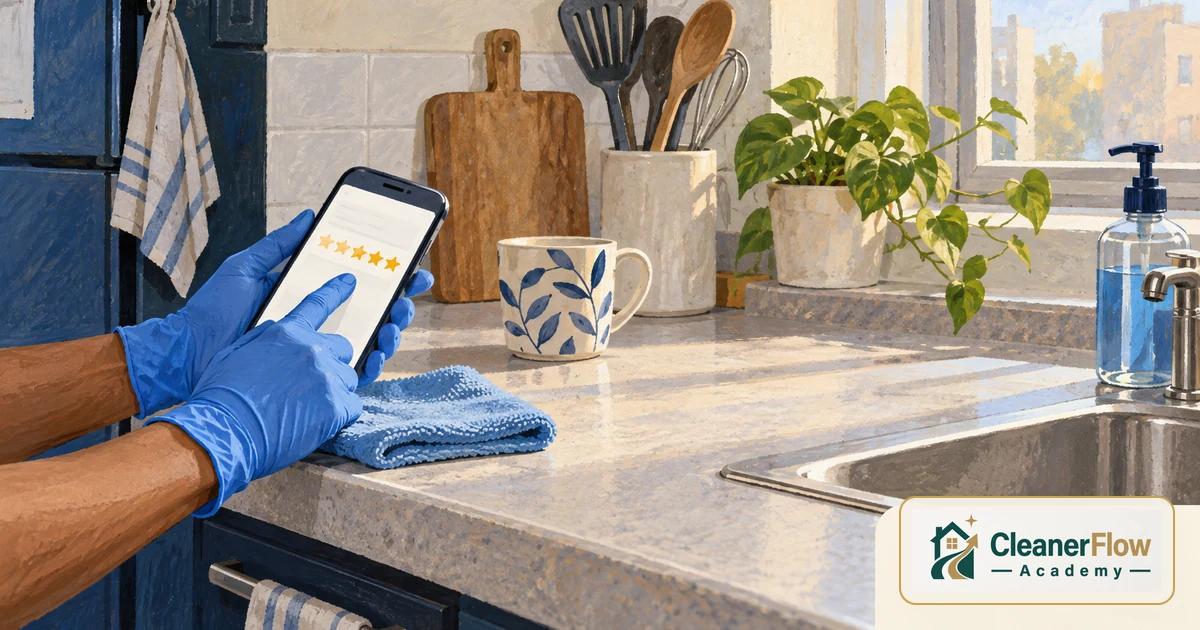
Why Reviews Matter More Than You Think
When a stranger is deciding whether to let you into their home, they cannot see your work yet. They have never watched you clean. So they look for the next best thing: proof from other people who have. A handful of honest reviews from happy clients does something no amount of self-promotion ever can. It tells a nervous new client that real people trust you, and that lowers their fear just enough to say yes.
Reviews are also one of the few marketing tools that keep working while you sleep. A good review you collect today can bring you a new client next month, next year, or three years from now. It sits there quietly, doing its job, long after you have forgotten you asked for it. That is a small effort with a very long payoff.
And yet most cleaners never ask. They finish beautiful work, the client is delighted, and then the moment passes and nothing gets written down. Learning to ask, comfortably and at the right time, is one of the highest-value habits you can build. It is also part of running your work like the real professional the CleanerFlow Academy certification recognizes you to be.
The Best Time to Ask Is When the Client Is Happiest
Timing matters more than the exact words you use. The best moment to ask for a review is right after you have delivered great work and the client has noticed. Maybe they just walked in and said the home looks wonderful. Maybe they thanked you warmly at the end of a deep clean. That warm, satisfied moment is when a yes comes easily and naturally.
The worst time to ask is when something went wrong, or when the client seems rushed, distracted, or stressed. Read the room. If a client is clearly not in a good mood, or is running out the door to work, wait for a better day. There will always be another visit and another good moment. Forcing the ask at a bad time only makes it awkward for both of you.
With a client you see regularly, you do not have to ask on the very first visit. Let them experience a few weeks of your reliable work first. By then they trust you, they have seen your consistency, and a review reflects their real, settled opinion rather than a first impression. A review earned over time also tends to be more specific and more convincing to the next reader.
Keep the Ask Simple and Low-Pressure
The biggest mistake is making the request feel like a big favor. It does not have to. A short, warm, honest ask works best. You might say that you are building your small business and that a short review would mean a lot, and that you would be grateful if they had a moment. That is it. No long speech, no pressure, no discomfort.
Give them an easy out, too. Something like "only if you have a moment" keeps it gracious and takes the pressure off. Most happy clients are glad to help someone they like and respect. You are not imposing on them. You are giving a satisfied person a natural, easy way to express something they already feel.
A few ways to phrase it
- In person: "I'm so glad you're happy with it. I'm building my little business on word of mouth, and if you ever have a minute, a short review would truly help me."
- By message: "Thank you again for today. If you have a moment, would you mind leaving a quick review? It makes a real difference for someone like me. No worries at all if you're busy."
- Light and honest: "Reviews are how new clients find me. Even one or two lines about your experience would mean the world."
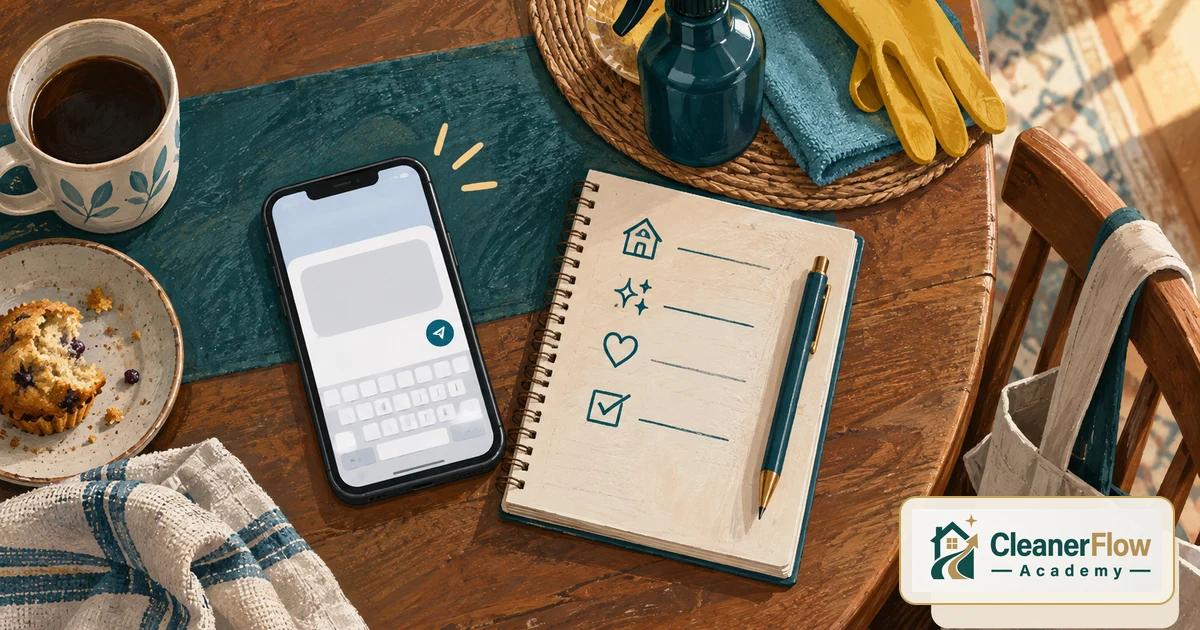
If asking out loud feels awkward, a message later that day works just as well. A written request also makes it easier for the client, because they can respond when it suits them, and the link or the place to leave the review is right there in front of them.
Make It as Easy as Possible to Actually Leave the Review
Even a willing client will not leave a review if it takes too many steps. Your job is to remove every bit of friction. Tell them exactly where to go and exactly what to do. If there is a specific place you would like the review, point them straight to it rather than making them hunt for it. The fewer taps between the client and the finished review, the more reviews you will collect.
People also freeze when they do not know what to write. The blank page is the enemy. You can gently help by suggesting they mention whatever stood out to them, whether that is your reliability, your attention to detail, or simply how their home felt afterward. You are not writing the review for them and you are not telling them what to say. You are just removing the fear that stops many people from starting.
Small touches that raise your response rate
- Send the link the same day, while the clean home is still fresh in their mind.
- Keep the message short enough to read on a phone in a few seconds.
- Offer one gentle prompt, such as "even just a sentence about how it went helps."
- Thank them right away when they do it, so they feel appreciated and remember you fondly.
A client who would happily help but has to figure out the how will often mean to do it and then forget entirely. A client who is handed a clear, one-step path will do it while they are still thinking of you and still glowing about the clean house.
Handle Less-Than-Perfect Feedback With Grace
Sometimes asking for a review surfaces a small complaint instead. This is not a failure. It is a gift. The client is telling you, privately and directly, exactly what to fix, and giving you the chance to fix it before it ever affects your reputation in public. That is far better than a quiet client who simply stops booking and never tells you why.
When this happens, thank them sincerely, take the note seriously, and address the issue on the spot or on the next visit. A client whose small problem you solved quickly often becomes more loyal than one who never had a problem at all, because they have now seen how you handle things when they are not perfect. That is exactly the reassurance people crave from someone they let into their home.
Never argue with feedback, and never pressure a lukewarm client into a glowing review. A forced review reads as forced, and it can do more harm than good. It is far better to have a smaller number of genuine, warm reviews than a big pile of hollow ones. Authenticity is something new clients can sense, and it is what actually earns their trust.
Build Reviews Into Your Normal Routine
The cleaners who collect the most reviews are not the boldest or the most charming. They are the most consistent. They have simply made asking a normal part of how they work, so it no longer feels like a special event that requires courage each time. Once it is a habit, the nerves disappear.
Pick a natural trigger and attach the ask to it. Good triggers include the end of a client's first month, the moment right after a big deep clean they were thrilled with, or a day when a client goes out of their way to compliment your work. When the trigger happens, you ask. No agonizing over whether today is the right day.
Keeping track of who you have already asked and who has responded is part of running an organized business. As your client list grows, this kind of follow-up, along with scheduling and reminders, becomes real work to manage well, and it is easy to lose track in your head. It is exactly the sort of thing a good set of business tools makes lighter, and it is one of the areas the CleanerFlow ecosystem is being built to support cleaners with.
Common Mistakes That Cost You Reviews
- Waiting weeks after the job, when the client's warm feeling has already faded.
- Making the ask long and apologetic, which makes it feel like a burden.
- Never telling the client where or how to leave the review, so good intentions quietly die.
- Asking on a stressful or rushed day and getting a polite no you did not need to hear.
- Chasing a huge number of reviews instead of a steady trickle of honest ones.
Reviews Build the Reputation That Carries Your Career
Every genuine review you gather is a small, permanent piece of your professional reputation. Over time these pieces add up to something powerful: a body of proof that you are reliable, skilled, and worth trusting. That reputation is what lets you raise your prices, choose your clients, and stop chasing work, because the work starts coming to you instead.
This is the same story your certification tells. A CleanerFlow Academy certification and a set of warm client reviews work together beautifully. The certification validates your skill and professionalism from a clear, structured standpoint, and the reviews show real people vouching for you in their own words. Together they make a new client feel confident before you have even picked up a cloth.
Get Certified
Start small. After your next great visit, when the client is smiling and the home looks perfect, ask for a short review in a warm, simple way. Make it easy for them, thank them right after, and do it again next time. Those reviews will quietly build your reputation for years, working for you long after the day is done.
And to give every review even more weight, get certified with CleanerFlow Academy. It is free, it is available in English, Portuguese, and Spanish, and it validates the professional you already are rather than trying to teach you a job you already know. A certified cleaner with a handful of genuine reviews is exactly the kind of professional new clients are hoping to find.
This week's post, in your inbox
One email a week, every Tuesday, with the new post from the blog.
You already clean well. Now you can prove it.
The 7 modules are free. The certificate, with a QR your client checks on the spot, proves what you already know how to do.
Other CleanerFlow apps
Your whole week in one place.
Homes, notes for every client, and who already paid, on your phone — even offline.
Cleaning jobs in your ZIP. See the quality score before you pay.
Every lead goes to 3 cleaners at most, and you get 14 days to dispute a dud.