The First Message That Books a New Cleaning Client
 Academy Team November 6, 2026 11 min read
The first message you send a potential client decides whether you get the job. Here is how to write one that is clear, warm, and easy to say yes to.
Why the First Message Decides Everything
When someone is looking for a house cleaner, they usually message several people at once. They are not only reading what you say. They are reading how you say it. Your first reply tells them whether you are organized, whether you will show up, and whether they can trust you inside their home. Most cleaners lose the job before they ever pick up a mop, simply because their first message was cold, confusing, or slow.
The good news is that a strong first message is not about clever words. It is about being clear, warm, and easy to answer. You already have the skill to clean a home well. This article helps you show that skill in the very first thing a client reads.
Think of the first message as an audition where you never see the judge. The client cannot watch you work yet, so they judge everything from the few lines you send. That feels unfair, but it is also good news, because it means a habit anyone can build, replying well, gives you an edge over more experienced cleaners who reply carelessly.
Answer Quickly, Even If the Answer Is Short
Speed matters more than most cleaners realize. A person searching for help wants relief, and they often hire the first professional who feels reliable. If you reply within an hour, you stand out. If you reply the next day, the job may already be gone.
You do not need a full quote to reply fast. A short message that says you received their request and will follow up with details is often enough to hold your place. What clients remember is that you responded like someone who is present and paying attention.
If you are cleaning during the day and cannot reply right away, a simple honest note works well. You can say you are with a client at the moment and will send full details by a certain time. This shows you respect their time and your current clients at the same time. It also quietly signals something valuable: that when you are in someone's home, you focus on that home and not on your phone.
A small habit helps here. Set two or three moments in your day, for example before your first job, at lunch, and in the early evening, when you check messages and reply properly. That way you never leave a new client waiting a whole day, and you never interrupt a clean to type a rushed reply you will regret.
Use Their Name and Repeat What They Asked For
A message that could have been sent to anyone feels like a form letter. A message written for one person feels like the start of a relationship. Start by using the client's name if you have it. Then repeat back what they asked for in your own words.
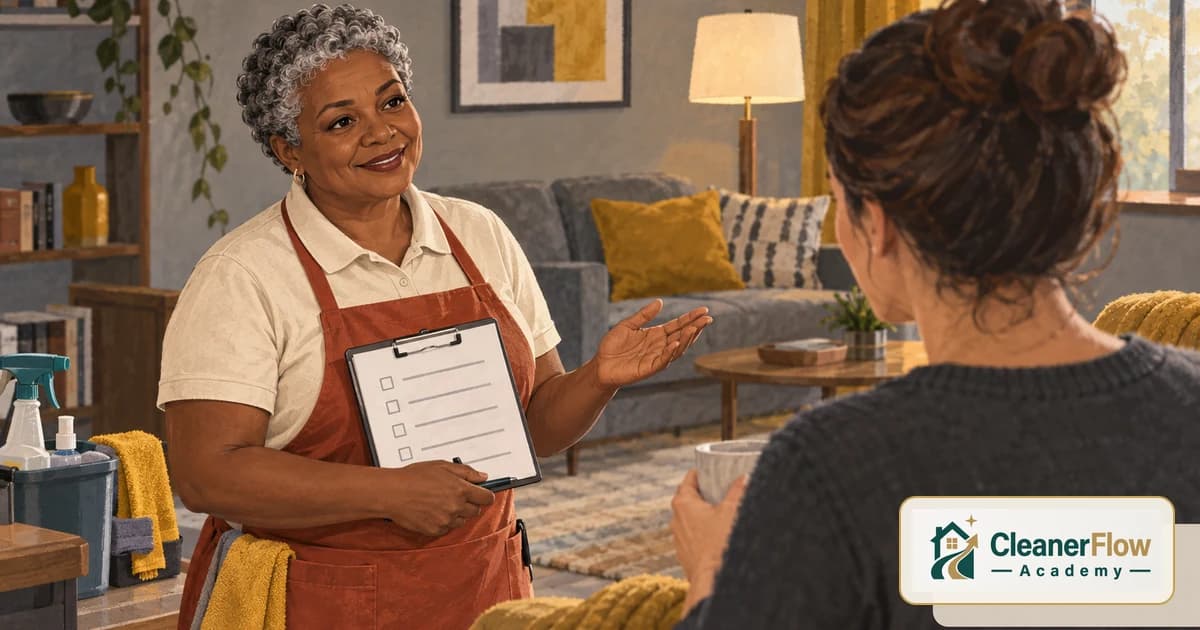
For example, if someone writes that they need a deep clean of a two bedroom apartment before moving out, your reply can mention exactly that. Confirming the two bedrooms, the move out timing, and the deep clean shows that you read carefully. It also quietly proves that you understand the difference between a regular clean and a move out clean, which not every cleaner does.
This small act of repeating their request back does something powerful. It makes the client feel heard. People hire professionals who make them feel understood, and they relax the moment they see that you actually read their words instead of pasting a generic reply.
Ask One or Two Smart Questions
A great first message often includes a question or two, because the right question does double work. It gets you the information you need to quote accurately, and it shows the client that you think carefully about your work.
Keep it to one or two questions so you do not turn the first message into a survey. Good questions are simple and practical. You might ask how many bathrooms there are, whether they would like a one time clean or a regular visit, whether there are pets in the home, and whether there is anything specific that matters most to them. That last question is powerful, because it invites the client to tell you what they truly care about, and it lets you win the job by promising exactly that.
Avoid asking things the client already told you. If they said it is a two bedroom apartment, do not ask how big the home is. Nothing undoes the good feeling of being heard faster than a question that proves you did not read.
Be Clear About What You Do and How You Work
Clients are often nervous because they do not know what to expect. They wonder if you bring supplies, how long you take, and whether the price they heard is the price they pay. Your first message can remove that worry.
Explain in plain language what a visit with you looks like. You can mention whether you bring your own products and equipment, roughly how long a home of their size takes, and what is included in a standard visit. You do not need to list every task. You need to give enough detail that the client can picture the day going smoothly.
If there are things you do not do, it is better to say so early. Some cleaners do not handle exterior windows, laundry, or dishes. Naming these limits in a friendly way prevents an awkward moment later and shows you are honest. It is far better for a client to learn your limits in a calm first message than to feel surprised on the day of the clean.
Give a Price Range or Explain How You Price
Avoiding the price question makes clients uneasy. They start to imagine that you will surprise them with a high number. You do not always need to give an exact figure in the first message, especially before you have seen the home. But you should never leave the topic blank.
You can offer a range based on the size and condition of the home, and explain that a firm price comes after a quick look or a few more questions. When you explain how you price, the client feels in control. They understand that the number is fair and based on real factors like square footage, number of bathrooms, and how much work the home needs.
Be careful never to promise a price you cannot keep. If the home turns out to need far more work, an honest early range protects both of you. It is much better to set a fair expectation than to lock yourself into a number that leaves you rushed and underpaid. A simple line works well: based on what you have described, it usually falls in this range, and I can confirm once I see the space.
Offer a Clear Next Step
Many first messages end without direction, and the conversation quietly dies. The client is not sure what to do next, so they move on to someone else. End your message by making the next step obvious and easy.
You can suggest a specific day and time to visit or start, or ask one simple question that moves things forward. Offering two time options is often easier for a client than asking them to invent a time themselves. The goal is to make saying yes feel like the natural next thing to do.
A clear next step also signals that you run your work like a professional. Clients relax when they sense that you have a system and that they do not have to manage you.
Keep Your Tone Warm and Human
Professional does not mean stiff. The warmest cleaners often win the most loyal clients. A friendly greeting, a thank you for reaching out, and a sentence that shows you care about their home all make a difference. People are inviting you into a private space. A little human warmth tells them they are safe.
At the same time, avoid trying too hard. You do not need to oversell yourself or make big claims. Calm confidence is more convincing than a long list of promises. Let your clarity and kindness do the work.
A Full Example You Can Adapt
It helps to see the pieces come together. Imagine a client wrote asking for help cleaning a small two bedroom home before a family visit this weekend. A strong reply might sound like this:
Hi Maria, thanks so much for reaching out. A two bedroom home before your family arrives is exactly the kind of clean I love to help with. I bring my own products and equipment, and for a home that size a thorough visit usually takes around three hours. A standard clean covers the kitchen, bathrooms, floors, dusting, and all the surfaces, and I can add inside the oven or the fridge if you would like. For a home like yours it usually falls in a fair range, and I can confirm the exact price once I know a little more. Would Friday morning or Saturday morning work better for you? Either way, I will make sure it looks and feels ready for your family.
Notice what that message does. It uses the name, repeats the request, explains how the visit works, names the possible extras, handles price honestly, and ends with two easy time options. You would change the details every time, but the shape stays the same.
Common Mistakes That Cost the Job
A few small mistakes send clients to the next cleaner. The first is a one word reply. Answering only with a price, or only with the word yes, feels cold and tells the client nothing. The second is ignoring part of the message. If they asked two questions and you answer one, they feel unheard. The third is being vague about money, which makes people assume the worst. The fourth is leaving no next step, so the conversation simply fades. The fifth is sounding desperate, with too many promises and exclamation points, which reads as pushy rather than reliable. Avoiding these five is often the whole difference between a reply that books and one that gets ignored.
Proofread Before You Send
A message full of errors makes a client wonder how careful you will be with their home. You do not need perfect grammar, and you do not need to sound like a textbook. But take ten seconds to read your message again before sending. Check that the client's name is right, that the price makes sense, and that you answered what they actually asked.
If you work across languages, send your message in the language the client used. If you are more comfortable in another language, it is fine to keep your message simple and clear rather than complicated and impressive. Clarity always beats fancy wording.
A Simple Structure You Can Reuse
Over time you will develop your own voice, but a reliable structure helps when you are busy. A strong first message usually greets the person by name, thanks them for reaching out, repeats what they asked for, explains briefly how you work, gives a price range or pricing method, and ends with a clear next step. That is the whole recipe.
You can keep a rough template in your notes and adjust it for each client. Just be sure to change the details every time so it never feels copied. The template saves you time. The personal details win the job.
Learn From Every Reply
Not every message will turn into a booking, and that is normal. Some people are only comparing prices, and some will disappear no matter what you write. Pay attention to which messages lead to work and which do not. Over a few weeks you will notice patterns, such as which opening line gets more replies or which price range leads to more bookings.
Treating your first message as a skill you can improve puts you ahead of most cleaners, who send the same rushed reply forever. Small improvements add up to more steady clients.
Bringing It All Together
The first message is your handshake before you ever meet. When it is quick, clear, warm, and easy to answer, clients feel confident choosing you. You do not need to be the cheapest or the flashiest. You need to be the professional who made them feel understood and safe from the very first line.
Earning a credential such as the CleanerFlow Academy certification can add quiet confidence to that first message, because it shows the client you take your work seriously. But the heart of it is always the same. Respect the client's time, understand their needs, and make the next step simple. Do that consistently, and your first messages will book more of the clients you want.
This week's post, in your inbox
One email a week, every Tuesday, with the new post from the blog.
You already clean well. Now you can prove it.
The 7 modules are free. The certificate, with a QR your client checks on the spot, proves what you already know how to do.
Other CleanerFlow apps
Your whole week in one place.
Homes, notes for every client, and who already paid, on your phone — even offline.
Cleaning jobs in your ZIP. See the quality score before you pay.
Every lead goes to 3 cleaners at most, and you get 14 days to dispute a dud.