
How to Build Trust as a New House Cleaner
Trust is what turns a one-time job into a steady client. Here is how a newer house cleaner earns it, step by step, through presentation, clear communication, reliability, and simple honesty that clients remember.
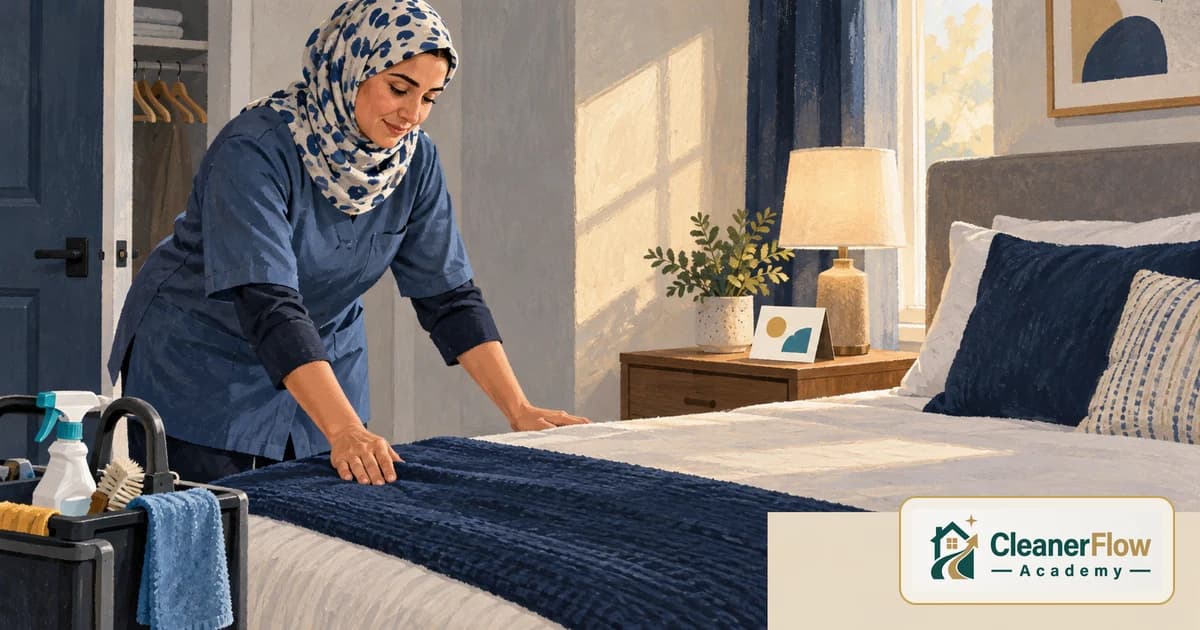
Trust Is the Real Product
When someone hires a house cleaner, they are not only paying for a clean home. They are handing a stranger the keys to the most private place they have. They are trusting you with their family photos, their medicine cabinet, their jewelry drawer, and the safety of their children and pets. That is an enormous thing to ask of anyone, and most clients feel a quiet nervousness the first time they let a new cleaner in the door.
If you are early in your cleaning career, this is the single most important thing to understand: your clients are not comparing your dusting technique to someone else's. They are asking themselves one question over and over. Can I trust this person in my home when I am not there?
The good news is that trust is not a personality trait you either have or do not have. It is built from small, repeatable actions that anyone can practice. This article walks through the specific habits that turn a nervous first-time client into someone who recommends you to their neighbors.
First Impressions Happen in the First Five Minutes
A client forms an opinion of you before you touch a single surface. The way you arrive tells them what kind of professional they hired.
- Arrive looking put-together. You do not need a uniform, but clean clothes, tied-back hair, and closed-toe shoes signal that you take the work seriously. A simple polo shirt or an apron you keep for work goes a long way.
- Introduce yourself clearly. Say your name, confirm theirs, and thank them for having you. A warm, unhurried greeting calms a nervous client faster than anything else.
- Bring your own supplies, organized. A tidy caddy or a clean bucket with your products shows preparation. Clients notice when someone shows up empty-handed expecting to borrow everything.
- Wipe your feet or bring shoe covers. Respecting the floor at the door tells the client you will respect the rest of the home too.
None of this is about looking fancy. It is about looking like someone who has done this before and cares about doing it right.
Communicate Clearly, and Put It in Writing
Most distrust between a cleaner and a client comes from a misunderstanding, not from bad work. The client expected the inside of the oven to be cleaned; you thought that was an extra. The client thought you were staying three hours; you planned for two. When expectations do not match, the client feels let down even if you worked hard.
The fix is simple: talk about the job clearly before you start, and write the important parts down.
- Walk through the home together the first time. Ask what matters most to them. Some clients care deeply about the bathrooms; others cannot stand a dusty living room. Learning their priorities lets you deliver what they actually want.
- Give a written quote. It does not need to be fancy. A short message or a simple sheet that lists what is included, how long it takes, and the price protects both of you. Written quotes prevent the awkward conversation where the client feels overcharged and you feel underpaid.
- Name what is not included. If interior windows, inside-the-fridge, or laundry are extra, say so up front. Clients respect a cleaner who is clear about boundaries far more than one who surprises them with a higher bill.
- Confirm the next visit in writing. A quick text the day before a cleaning reminds the client and confirms you are coming. It takes ten seconds and prevents no-shows on both sides.
Clear communication does something powerful: it removes the fear of being taken advantage of. When a client never has to wonder what they are paying for, they relax, and a relaxed client becomes a loyal one.
Show Up on Time, Every Single Time
If there is one habit that builds trust faster than any other, it is reliability. Being on time, every time, is a quiet promise that you keep over and over. Clients organize their day around your arrival. They may take time off work, leave a door unlocked, or plan to be home to let you in. When you are late without warning, you break more than a schedule; you plant a seed of doubt.
- Plan to arrive a few minutes early. Build travel time and traffic into your day so that on-time is your normal, not your goal.
- If you will be late, tell them immediately. A message like "Traffic is heavy, I will be there fifteen minutes later than planned" turns a broken promise into a kept one. Clients forgive lateness; they do not forgive silence.
- Never simply not show up. A missed appointment without a call is the fastest way to lose a client forever. If an emergency happens, call as early as you can and offer to reschedule.
- Be consistent with your finish time too. If you said two hours, aim to finish in two hours. Staying far longer to charge more, or rushing out early, both erode trust.
Reliability is unglamorous, but it is the foundation everything else sits on. A cleaner who is a little slower but always on time will keep clients longer than a brilliant cleaner who is unpredictable.
Respect the Home and the Privacy Inside It
When you are alone in someone's home, your behavior when no one is watching is the truest measure of your character. Clients cannot see this directly, so they watch for signals that tell them what kind of person you are.
- Do not touch what you are not cleaning. Papers on a desk, an open laptop, a phone left on the counter, mail on the table: leave these exactly as you found them. Straighten them only if that is part of the agreed work.
- Do not open drawers, closets, or cabinets you were not asked to clean. Curiosity, even innocent, can look terrible if a client notices something moved.
- Keep private things private. You will see things in people's homes. What you see stays with you. Never gossip about a client to another client, and never mention what one home looks like to anyone.
- Be careful with medicine and personal items. Wipe around them, not through them. If you must move something to clean, put it back exactly where it was.
- Ask before you throw anything away. What looks like trash to you may be something the client is keeping. When in doubt, leave it and ask.
Respecting privacy also means respecting the people who live there. If children, an elderly parent, or a pet is home, be gentle and polite. The way you treat a client's family says everything about the way you will treat their home.
Handle Keys, Access, and Valuables Responsibly
At some point a client may trust you enough to give you a key, a garage code, or an alarm password so you can clean while they are away. This is a major step, and how you handle it will either deepen the trust or end the relationship.
- Guard keys and codes like they are your own house. Never label a key with the client's name or address. If it is lost with a name on it, the client's home is exposed.
- Keep access information private and secure. Do not write alarm codes where others can see them. Do not share a client's key or code with anyone, including another cleaner, without the client's clear permission.
- Lock up carefully every time. Before you leave, check that doors are locked, the alarm is set the way the client asked, and windows are closed. Send a quick message confirming the home is secure.
- Never let anyone in. If someone comes to the door claiming to be a friend or family member, do not let them in. Tell them to contact the client directly. Your job is to protect the home, not to make judgment calls about who belongs there.
- Report valuables you notice near your work. If you see cash, jewelry, or an expensive item in an area you need to clean, it is wise to leave it untouched and mention it. "I noticed a ring by the sink, so I cleaned around it and left it there" removes any question later.
When something goes missing in a home, the cleaner is often the first person suspected, fairly or not. The way you protect yourself is by being visibly careful, communicating openly, and never giving anyone a reason to wonder.
Consistency and a Repeatable Checklist
Trust grows when a client knows what to expect. If one visit is spotless and the next one misses the bathroom mirror and the kitchen floor, the client starts checking your work, and a client who checks your work does not fully trust you.
The answer is a checklist you follow the same way every time.
- Write down your standard routine for each room. For a bathroom that might be: toilet, sink, counter, mirror, shower and tub, floor, empty trash, restock paper. For a kitchen: counters, sink, stovetop, outside of appliances, floor, trash.
- Follow the same order every visit. A repeatable order means you never forget a step, and your quality stays even whether you feel great or you are tired.
- Do a final walk-through before you leave. Two minutes checking each room catches the smudge you missed and shows the client a finished, thought-through job.
- Adjust the checklist to each client. Once you learn that a certain client always wants the baseboards done or the throw pillows arranged a certain way, add it to their personal list so it happens every time without being asked.
Consistency is what lets a client stop supervising and start relying on you. That shift, from watching to relying, is the moment you become their cleaner rather than just a cleaner they tried.
Ask for Reviews and Let Them Speak for You
A nervous new client cannot judge your work from the inside, so they look for proof from people like them. Honest reviews from real clients are the most convincing evidence you can offer.
- Ask at the right moment. The best time is right after a client tells you they are happy, or after a job you know went especially well. A simple "If you were pleased with today, a short review would mean a lot to me" is enough.
- Make it easy. Point them to wherever you collect feedback, whether that is a review site, a local community group, or a simple message you can screenshot with permission.
- Display what people say. With the client's permission, keep a few short quotes you can show a prospective client. "Here is what a family in your neighborhood said" reassures someone far more than anything you say about yourself.
- Respond gracefully to every review, even a critical one. A calm, professional reply to a complaint often earns more trust than a wall of perfect ratings. It shows you take problems seriously.
One honest review from a real neighbor outweighs a page of your own promises. Let satisfied clients do the convincing for you.
Be Insured, and Say So Plainly
Carrying liability insurance is one of the clearest signals that you treat cleaning as a real business and not a casual side task. It protects the client if something is accidentally damaged, and it protects you from a single accident wiping out your income.
- Look into a basic liability policy. Coverage designed for cleaners is more affordable than many people expect, and it changes how clients see you.
- Mention it calmly when it fits. "I carry liability insurance, so you are covered if anything is ever damaged" is a quiet sentence that removes a big worry. You are not bragging; you are removing a fear the client may have been too polite to raise.
- Understand what your coverage does and does not include so you can answer questions honestly. Never claim protection you do not actually have.
Insurance will rarely win you a client on its own, but its absence can quietly lose you the careful, higher-value clients who ask about it. Being able to say yes puts you in a different category.
Be Honest When Something Breaks
Sooner or later, it will happen. A glass slips, a shelf gets scratched, a decoration chips. In that moment you face a choice that defines your reputation: hide it or own it.
Always own it.
- Tell the client the same day. Do not wait for them to discover it. A message like "I am so sorry, while cleaning the shelf I knocked over a small vase and it broke. I want to make it right" is hard to send, but it builds more trust than a hundred perfect visits.
- Offer to make it right. Depending on the item, that may mean replacing it, paying for it, or having your insurance cover it. What matters is that the client sees you take responsibility.
- Never hide damage or blame someone else. A client who finds a broken item you did not mention will assume the worst about everything else you have ever touched. One hidden accident can undo years of good work.
Honesty in a bad moment is worth more than perfection in a good one. Clients do not expect you to never make a mistake. They expect you to be the kind of person who tells the truth when you do.
How a Credential Can Reassure a Nervous First Client
Everything above is about proving yourself over time. But the hardest trust to earn is the very first job, before the client has seen any of your reliability, before there are reviews, before you have handled their key without incident. In that first moment, they are trusting you on faith alone.
This is where an outside credential helps. When an outside organization has reviewed and recognized the standards a cleaner works to, it gives a nervous client something concrete to hold onto besides a gut feeling.
CleanerFlow Academy is a trilingual certification for house cleaners in the United States. It does not teach you how to clean; it recognizes and qualifies the experience you already have, and confirms that you understand professional standards around safety, privacy, and responsible work in someone's home. It is a private certificate, not a government license, and it is honest about that. There is no federal cleaning license in the United States, so no one can promise you one.
What a credential like this offers a newer cleaner is a way to signal seriousness before you have a track record. Being able to say that your experience has been reviewed and recognized by a neutral organization gives a first-time client a reason to say yes when they have nothing else to go on. It does not replace showing up on time, respecting the home, and being honest. It simply opens the door so you get the chance to prove all of that.
Trust Is Built One Ordinary Day at a Time
There is no shortcut here, and that is actually good news. You do not need years of experience or a large company behind you to be trusted. You need to arrive on time, communicate clearly, respect the home and everyone in it, protect the keys and the privacy you are given, work the same reliable way every visit, and tell the truth when something goes wrong.
Do those things consistently and something quietly powerful happens. Clients stop watching you and start recommending you. The nervous first-timer becomes the person who tells their whole neighborhood they finally found a cleaner they trust. That reputation, earned one ordinary day at a time, is the most valuable thing you can build in this work, and no one can take it from you.
You already clean well. Now you can prove it.
The 7 modules are free. The certificate, with a QR your client checks on the spot, proves what you already know how to do.
Other CleanerFlow apps
Your whole week in one place.
Homes, notes for every client, and who already paid, on your phone — even offline.
Cleaning jobs in your ZIP. See the quality score before you pay.
Every lead goes to 3 cleaners at most, and you get 14 days to dispute a dud.