How to Build Trust Working Alone in Homes
Working alone in someone's home is a position of deep trust. Here are practical, respectful habits that make clients feel completely comfortable handing you their space and their keys.
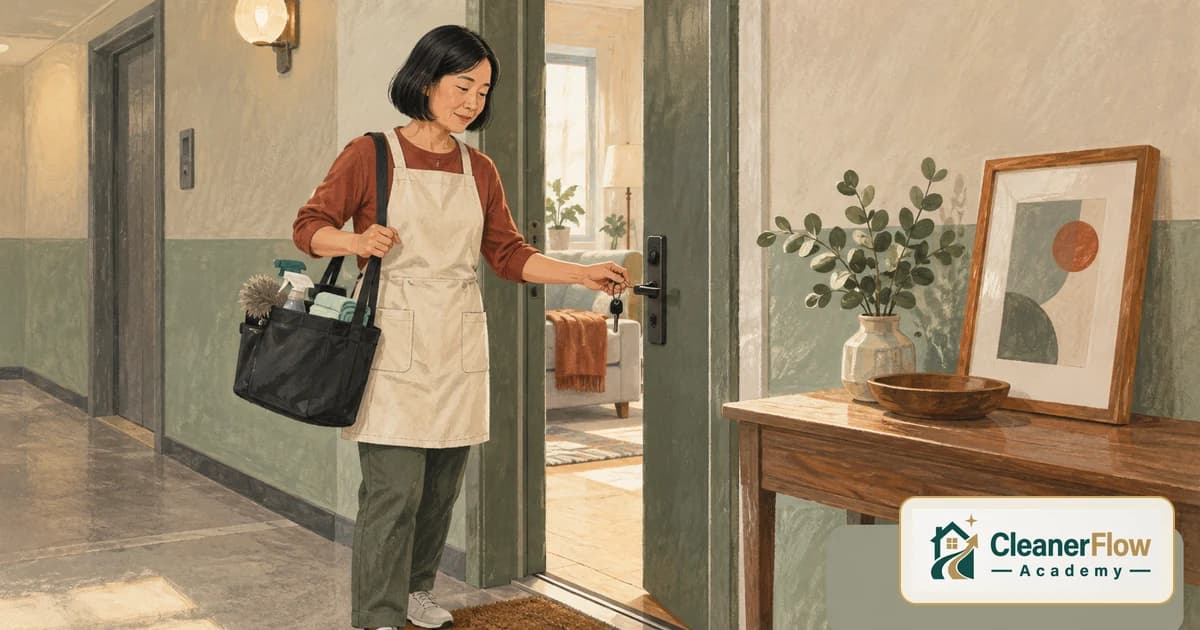
The unique trust of working alone
When you clean a home, you are often there by yourself, sometimes with no one else present at all. The client may be at work, running errands, or simply out. That means they are trusting you with something enormous: full access to their private space, their belongings, and everything they value, with no one watching.
Few jobs carry that level of trust. A house cleaner working alone is in a position that a client grants to very few people in their life. Understanding the weight of that is the first step to honoring it, and honoring it well is what turns a one-time job into a client for years. This article is about the practical, respectful habits that build and keep that trust, and how to make your trustworthiness visible even when no one is there to see it.
What a client is really worried about
Before you can ease a client's mind, it helps to understand what quietly worries them. Most people do not say it out loud, but when they let a cleaner into an empty home, a few concerns run underneath everything.
- Will my things be safe? Nothing broken, nothing missing, nothing damaged.
- Will my privacy be respected? No one reading my mail, opening drawers, or looking at what is personal.
- Will the person actually show up, and do good work when I am not there to check?
- Is this someone I can rely on, or a stranger I am gambling on?
Every habit in this article answers one of these worries. When you picture the real person behind the door, deciding whether to hand a key to someone they barely know, the small respectful choices stop feeling optional. They are the exact things that put a nervous client at ease.
Trust starts before they leave you alone
Most clients will not hand you a key on the first day. Trust is earned in stages, and the earliest stage happens while they are still around, watching how you carry yourself. Those first few visits, when the client is home, are your audition for being trusted alone later.
During those visits, everything you do is being quietly noticed. Do you treat their things with care? Do you ask before doing something you are unsure about? Are you respectful of their space and their routines? Clients use these early observations to decide whether they feel safe leaving you on your own. So the path to being trusted alone begins with being visibly trustworthy when they are present.
A few small actions in those early visits carry a lot of weight. Ask where they keep things rather than guessing. Confirm which areas they want done and which to leave alone. Mention when you are moving something valuable to clean under it. None of this is dramatic, but a client watching notices each one, and each one adds to the sense that you can be trusted without supervision.
One thing that helps enormously in these early moments is being able to show you are a certified professional. When a client can see you are certified through CleanerFlow Academy, a trilingual certification for house cleaners in the United States, and that it can even be verified, it gives them an early, concrete reason to feel safe, well before they have months of experience with you to lean on.
Respect the home as if you are a guest
The simplest guiding principle for working alone is to treat the home the way a respectful guest would, even when no one can see you. This is not about being watched. It is about who you are when you are not.
In practice, respecting the home looks like this:
- Stay in the areas of your work. If your job is certain rooms, there is no reason to wander into others. Going only where your work takes you is a quiet act of respect that clients deeply value.
- Do not touch what you do not need to. Move what you must to clean, and put it back exactly as it was. A home that is returned to its owner exactly as they left it, only cleaner, tells them you respected their space.
- Never look through personal things. Drawers, papers, closets, and private belongings are not yours to explore. A professional cleans around and over the surfaces of a life without ever prying into it.
- Keep your phone for work, not for browsing their home. Do not photograph a client's space or their belongings unless they have asked you to, for example to confirm a finished job. Their home is not content.
These habits matter most precisely because no one is there to enforce them. A client cannot see you follow them, but they can feel the result: a home that always feels respected, never disturbed. That feeling is the foundation of trust that lasts.
Handle their belongings with visible care
Even when you work alone, the evidence of how you treated the home speaks after you leave. A client notices when a fragile item was moved and dusted and set back perfectly. They notice when nothing is broken, nothing is missing, and nothing is out of place. Over time, that consistent evidence builds a deep confidence that you handle their things with care.
So work as if the client will inspect everything, because in a sense they do, just not while you are there. Be gentle with fragile and valuable items. If something is delicate, give it extra care or leave it undisturbed rather than risk it. A useful habit is to photograph a crowded shelf or a group of small objects before you move them, so you can put every piece back in exactly the right spot.
And if an accident ever happens, because accidents do, be honest about it immediately. Do not hide a chipped mug at the back of a cabinet or hope a small stain goes unnoticed. Tell the client plainly what happened, and offer to make it right. A client who learns you hid a mistake loses trust instantly, while a client who sees you own up to one honestly often trusts you more, not less. Honesty about mistakes is one of the strongest trust builders there is.
A note on money, medicine, and anything sensitive
Now and then you will clean around things that are especially sensitive: cash left on a counter, jewelry, prescription medicine, important documents. The safest rule is simple. Clean around them, never through them, and never move them unless you truly must to do your work. If you do have to move cash or valuables to clean a surface, put them back in the exact same spot, and it is fine to mention it to the client afterward so nothing seems to have vanished. The goal is that a client counting their things later never finds a single reason to wonder.
Be consistent, visit after visit
Working alone builds trust slowly, through repetition. The client comes home after each visit and finds the same thing: a well-cleaned home, everything respected, nothing amiss. One good visit is nice. Fifty good visits in a row is a relationship. It is the unbroken pattern that lets a client finally stop thinking about whether they can trust you, because you have removed all doubt through sheer consistency.
This is why reliability matters as much as the cleaning itself. Showing up when you said, every single time, is part of the trust. If you are running late or need to reschedule, say so early rather than leaving them guessing, because how you handle the rare off day says as much as a hundred smooth ones. A client who never has to wonder whether you will come, or whether the home will be handled well, reaches a level of comfort where handing you a key feels natural. That is the goal: to become so consistently trustworthy that trusting you no longer requires any thought at all.
Communicate simply and honestly
Working alone does not mean working in silence. Good, simple communication is a major part of trust. Let the client know when you arrive and when you finish, if that is what they prefer. A short message on the way out saying the home is done and locked up can be surprisingly reassuring.
If something needs their attention, tell them plainly and without drama. That might be a cleaning supply running low, an area you could not fully address, a leak under a sink, or something that simply seemed off. This kind of honest, low-key communication reassures a client that nothing is hidden. They know what happened in their home while they were away, because you told them. That openness is the opposite of the quiet worry that makes people nervous about letting someone in alone. A client who always knows what is going on never has to wonder, and never wondering is what trust feels like.
Safety is part of trust too
Trust is not only about honesty and respect. It is also about competence and safety. A client trusts that you will not damage their home or create a hazard while you work. Honoring that means following safe practices carefully, even when no one is checking.
That includes the basics that protect both the home and you: never mixing cleaning chemicals, always following the label on every product, testing a strong product on a small hidden area first, and using the right approach for each surface so nothing gets damaged. It also means simple things like drying a slippery floor and not leaving a hazard behind. A client who comes home to a spotless space with nothing harmed and no lingering problems trusts not just your honesty but your professionalism. Working alone means you are the only safeguard, so being careful and knowledgeable is itself an act of trustworthiness.
When you are alone with pets, keys, or an alarm
Working alone often comes with small responsibilities beyond cleaning: a pet in the house, a key or code to let yourself in, an alarm to arm on the way out. Handle each one exactly the way the client asked. Do not let a cat slip outside, do not leave a door unlocked, do not skip arming the alarm because you were in a hurry. These are the moments a client remembers most, because a single mistake here feels much bigger than a missed corner. Getting them right, every time, is a quiet but powerful signal that you can be trusted with real responsibility.
Let your professionalism be visible
Because so much of working alone is unseen, it helps to make your professionalism visible in the moments the client can see. Arriving tidy and prepared, speaking calmly, being organized, and being able to show a real, current certification all give the client evidence they can point to. These visible signals stand in for all the careful work they cannot watch, telling them what kind of professional is in their home even when they are not.
This is where a certification quietly does a lot of work. It is a piece of proof the client can hold onto, a reason to feel confident that the person they leave alone in their home takes the profession seriously. Getting certified through CleanerFlow Academy is free, and it gives clients exactly that kind of concrete reassurance at the very stage when they are deciding whether to trust you on your own.
The bigger picture
Building trust while working alone comes down to a simple truth: be the same trustworthy professional whether or not anyone is watching. Respect the home like a guest, handle belongings with care, stay consistent, communicate honestly, work safely, and let your professionalism show. Do these steadily, and clients move from watching you closely to handing you a key without a second thought.
That trust is the real asset of a house cleaner. It is what keeps clients for years and turns them into people who refer you to their friends. And as your reputation grows, running like a full professional also means a steady schedule, a reliable flow of clients, and simple tools to stay organized, which is the ecosystem CleanerFlow is building for cleaners. But the heart of it all is the trust you earn in those quiet hours alone in someone's home, one respectful visit at a time.
CleanerFlow Academy trains you for free, in your language — and the certificate is yours to show any client.
Start the free training