
How a Client Can Verify Your Cleaning Certificate
A certificate is only as strong as a client's ability to trust it. Here is exactly how a homeowner can confirm your cleaning credential in under a minute, and how to present it so verification is effortless.
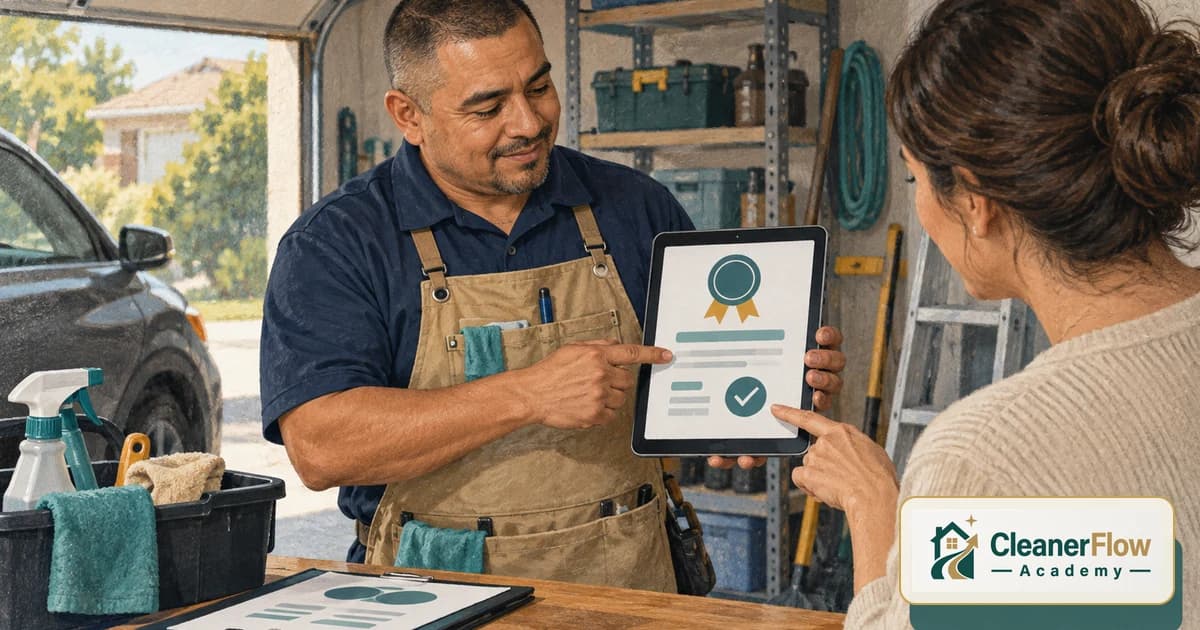
Why Verification Matters More Than the Certificate Itself
A certificate on your phone or printed in a folder is only as strong as a client's ability to trust it. Homeowners in the United States are inviting a stranger into the most private space they own. When they ask about your certification, they are not doubting your skill. They are looking for a simple, honest way to confirm that what you told them is real. If you can hand them a clear path to verify your certificate in under a minute, you remove the last bit of hesitation standing between you and the job.
This article walks through exactly how a client can confirm that your cleaning certificate is genuine, what information they should look for, and how you can present your credential so verification is effortless. It is written for house cleaners who already have real experience and simply want that experience recognized in a way clients can check for themselves.
What a Verifiable Certificate Actually Contains
Not every certificate is built to be checked. Some documents are just a nice-looking image with a name typed on them. A certificate that a client can actually verify has a few specific ingredients.
The first is a unique identifier. This is usually a certificate number or code that belongs only to your record. No two cleaners share the same code. When a client enters or reads that code, it should point to one person and one credential.
The second is an issue date and, when it applies, a status. A meaningful certificate tells the viewer when it was granted and whether it is currently active. A credential that quietly expired two years ago is not the same as one that is current today, and an honest verification system will show the difference.
The third is the name of the issuing body. A client should be able to see who granted the certificate. In the case of a program like CleanerFlow Academy, the certificate carries the name of the organization that assessed and recognized your experience, so the client knows where the credential came from.
The fourth is a way to look it up. This is the heart of verification. A certificate that cannot be confirmed anywhere is just a picture. A certificate that can be checked against the issuer's own records is a credential.
The Simple Path a Client Follows
When a client wants to confirm your certificate, the process should feel obvious. Here is the flow you can describe to them in plain words.
They start by reading the certificate you show them. They note your full name and the certificate number or code printed on it. These two pieces of information are what they will match.
Next, they go to the verification page provided by the issuer. Many certification programs publish a page where anyone can confirm a credential. The client types in the code, or in some systems scans a code with their phone camera, and the page returns the result.
Finally, they compare what the page shows against what you told them. The name should match. The status should read as active or current. The issue date should make sense. If all three line up, the client has confirmed your certificate without needing to call anyone or wait for a reply.
The entire process usually takes less than a minute. That speed is the point. Verification is not meant to be an interrogation. It is meant to give a nervous homeowner a quick, reassuring yes.
How a Scannable Code Works
Some certificates include a square scannable code. A client points their phone camera at it, and the phone offers to open a page. That page shows the credential details straight from the issuer.
This method removes the chance of typing a code incorrectly. It also feels modern and trustworthy to clients who are used to scanning codes at restaurants and stores. If your certificate offers a scannable code, mention it when you hand over the document. A short sentence such as, "You can scan this with your camera to confirm it," turns a passive document into an active proof.
Keep in mind that a scannable code should always lead to the issuer's own site, not to a random page. Encourage clients to look at the web address that opens. A genuine verification page belongs to the certification program itself.
What "Active" and "Expired" Really Mean
Verification is not only about proving a certificate exists. It is also about proving it is still current. Many respected credentials have a renewal cycle. A certificate might be valid for one year and then need to be renewed to stay active.
When a client checks your credential and sees the word active or current, that is a strong signal. It tells them you did not simply earn a certificate once and let it lapse. It tells them you have kept it up to date, which quietly communicates that you take your work seriously.
If your certificate has an expiration date, be honest about it. Never present an expired credential as if it were current. A client who verifies and finds an expired status will trust you far less than if you had simply said, "My renewal is coming up next month." Honesty about status protects your reputation more than any single job is worth.
Presenting Your Certificate So Clients Verify Without Friction
You can make verification easy or you can make it awkward. The difference is in how you present the credential. A few habits make you look organized and confident.
Keep a clean digital copy on your phone. A crisp image or a saved page loads instantly when a client asks. Fumbling through a messy camera roll sends the opposite signal.
Offer the verification method before they ask. When you mention your certification during a first conversation, add one short line about how they can confirm it. Volunteering this shows you have nothing to hide.
Include the code where it belongs. If you share a profile, a flyer, or a message with a client, the certificate code or a scannable code can sit right next to your name. The easier it is to find, the more real it feels.
Never crop out or hide the identifier. Some cleaners blur or remove the code out of a vague fear of fraud. In practice, the code is what makes the certificate trustworthy. Hiding it makes the document look less legitimate, not more.
Common Questions Clients Ask, and Honest Answers
Clients sometimes ask questions that catch cleaners off guard. Being ready with plain, truthful answers builds trust faster than a polished sales line.
They may ask whether the certificate is a government license. The honest answer is no. In the United States there is no federal license required to clean private homes, and a certificate from a private program is not a state or federal license. What it is, is a recognized, checkable confirmation that your experience was assessed by an outside organization. That distinction matters, and stating it plainly makes you look more credible, not less.
They may ask what the certificate proves. It proves that an independent program recognized your cleaning experience and knowledge against its own standard. It does not promise a specific outcome or guarantee. It confirms that you met the standard the program set.
They may ask why it matters if you already have years of experience. The answer is simple. Experience lives in your hands, but a client cannot see your past. A verifiable certificate turns invisible experience into something a stranger can confirm in a minute. It is proof they can hold, not a story they have to take on faith.
When Verification Reveals a Problem
Occasionally a client will verify a certificate and find that something does not match. Perhaps the name is spelled differently, or the status is not what they expected. If this happens with your own credential, treat it as a chance to be transparent rather than defensive.
If the name differs because you go by a shortened version, explain that calmly and show identification if needed. If the status shows a lapse, acknowledge it and share when you plan to renew. Clients are far more forgiving of an honest explanation than of a defensive reaction. The goal of verification is not perfection. It is trust, and trust survives small imperfections when honesty is present.
Making Verification Part of Your Professional Reputation
The cleaners who grow the fastest are usually the ones who make trust effortless for clients. A verifiable certificate is one of the cleanest ways to do that. It replaces "trust me" with "check for yourself," and that small shift changes how a homeowner sees you.
Think of verification not as a hurdle but as a quiet advantage. Most cleaners in a neighborhood will not offer any way to confirm their background. When you do, you stand apart immediately. You look organized, honest, and secure in your own work.
A credential from a program such as CleanerFlow Academy is designed to be checked, which is exactly what makes it useful. The value is not only in earning it. The value is in being able to say, with total calm, "Here is my certificate, and here is how you can confirm it yourself." That sentence, more than almost anything else you can say, tells a client they are in careful hands.
A Short Script You Can Use Today
If you want a ready phrase for your next client conversation, try something like this. "I have a professional cleaning certificate. Here it is, and if you would like, you can confirm it directly with the program using this code. It only takes a minute." Say it warmly, hand over the document, and let the client do what they wish with it.
Most will not even bother to check, precisely because you offered. The offer itself is the proof. And for the client who does verify, you will have made a first impression that quietly says everything about how you work.
You already clean well. Now you can prove it.
The 7 modules are free. The certificate, with a QR your client checks on the spot, proves what you already know how to do.
Other CleanerFlow apps
Your whole week in one place.
Homes, notes for every client, and who already paid, on your phone — even offline.
Cleaning jobs in your ZIP. See the quality score before you pay.
Every lead goes to 3 cleaners at most, and you get 14 days to dispute a dud.