
The Add-On Services That Raise Every Cleaning Visit
Add-on services let you earn more without booking more clients. Here are the extras that fit naturally into a cleaning visit, how to price them, and how to offer them without pressure.
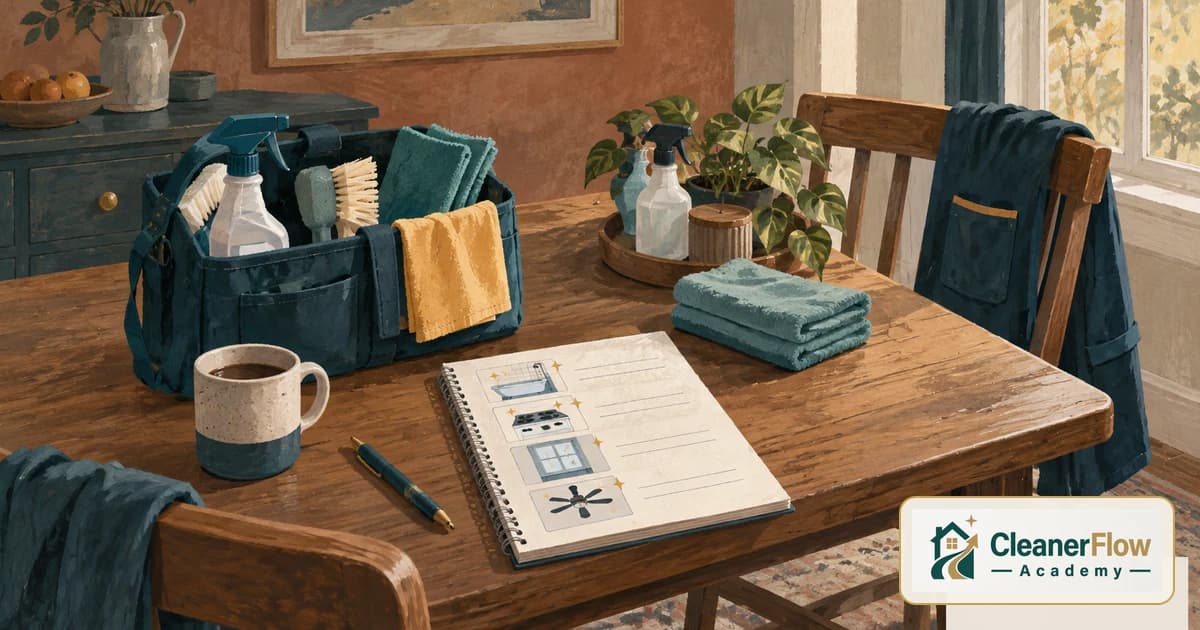
More value from visits you already have
Most house cleaners try to grow by finding more clients. That works, but it is slow and it fills your week with driving. There is a second path that is often easier: earn more from the visits you already have. Add-on services, sometimes called extras, are small jobs you can offer on top of a standard cleaning. Done well, they raise the value of a visit by twenty to fifty percent without adding a single client to your route.
This article walks through the add-ons that fit naturally into residential work, realistic ways to price them, and how to present them so clients feel served rather than sold to.
Why add-ons work so well
A standard cleaning covers the expected surfaces: floors, counters, bathrooms, kitchen, dusting, and trash. Clients get used to that scope quickly, and once they do, the price feels fixed in their mind. Add-ons break that ceiling because they are clearly separate from the routine. The client understands they are paying for extra work, so the extra charge feels fair.
Add-ons also solve a real problem. Every home has jobs that never get done: the inside of the oven, the refrigerator that has not been emptied in months, the baseboards behind furniture. These are the tasks homeowners feel guilty about and rarely tackle themselves. When you offer to handle them, you are not upselling in a pushy sense. You are removing a burden the client already carries.
The add-ons worth offering
Not every extra is worth your time. The best add-ons share three traits: they take moderate time, they use tools you already carry, and clients notice the result. Here are the ones that consistently earn their place.
Inside the oven
Oven interiors are greasy, baked-on, and unpleasant, which is exactly why people avoid them. A thorough oven clean takes real effort and often a product that needs dwell time, so it deserves a separate charge. As an illustrative figure, many cleaners charge between twenty-five and forty dollars for an oven, depending on how bad it is. Start the product early in your visit so it can work while you handle other rooms.
Inside the refrigerator
Emptying, wiping, and organizing a refrigerator is a job clients dread. It takes twenty to thirty minutes and produces a result they see and smell immediately. A common illustrative range is twenty to thirty-five dollars. Ask the client to clear out expired food beforehand so you are cleaning, not sorting garbage.
Interior windows
Window glass inside the home, along with sills and tracks, transforms how bright a room feels. Price this per window or per group of windows. As an example, some cleaners charge four to seven dollars per interior pane. Be clear that exterior windows and anything requiring a tall ladder are a different, riskier service.
Baseboards and door frames by hand
Baseboards collect dust and scuff marks that a quick pass never removes. Hand-wiping them across a whole home is slow, detailed work. A flat add-on in the range of twenty-five to fifty dollars for an average home reflects the time it truly takes.
Inside cabinets and drawers
When a client is willing to empty a cabinet, wiping the interior is straightforward and appreciated. This pairs well with kitchen resets. Price it by the number of cabinets or as a small flat fee.
Laundry and linens
Stripping beds, washing, and remaking them adds comfort a client feels the same night. If you offer to run laundry, be honest that it depends on the machines being available and that you cannot always finish a full cycle within your visit window.
Interior wall spot-cleaning
Removing fingerprints, marks, and scuffs from walls is a light task with a big visual payoff, especially in homes with children. Keep it as spot work, not full wall washing, which is a larger job.
How to price add-ons fairly
The simplest rule is to price by time. Estimate how long the extra takes, multiply by your hourly rate, and round to a clean number. If your effective rate is forty dollars an hour and an oven takes forty-five minutes, thirty dollars is a fair charge. This keeps your extras consistent with the rest of your pricing and easy to explain.
For add-ons that vary a lot, like a refrigerator that has not been touched in a year, quote a range and confirm before you start. Clients respect a cleaner who says, this one is heavier than usual, so it will be closer to the top of the range. That honesty builds trust.
Avoid the mistake of pricing add-ons too low to seem generous. An extra that costs you thirty minutes but earns ten dollars is not worth doing. Your goal is to raise the value of the visit, not to give away labor.
How to offer add-ons without pressure
The way you present extras matters more than the extras themselves. Clients can sense pressure, and it damages the relationship you depend on for repeat work. Use these approaches instead.
Mention them once, then let them decide
During your first visit or your intake conversation, list your available add-ons plainly. Something like, I also offer oven cleaning, inside the refrigerator, and interior windows if you ever want those. Then stop. You have planted the idea without pushing.
Point out what you notice, honestly
If you see an oven that clearly needs attention, you can say, I noticed your oven has some buildup. I can take care of that anytime you want, it runs about thirty dollars. This is helpful, not salesy, because it is true and specific.
Offer a seasonal reset
Many clients respond well to a once or twice a year deep add-on package. Suggest a spring reset that bundles the oven, refrigerator, baseboards, and interior windows. Bundling makes the total feel like a project rather than a string of charges.
Never add charges without asking
The fastest way to lose a client is to perform an extra and put it on the invoice as a surprise. Always confirm the add-on and its price before you begin. A confirmed extra is a happy client. A surprise extra is a complaint.
Protecting your schedule
Add-ons take time, and time is the resource you are actually selling. If a client wants three extras added to a two-hour visit, you either need to extend the visit or move your next appointment. Decide in advance how you handle this. Some cleaners keep buffer time between jobs specifically so extras do not cascade into lateness. Others require add-ons to be booked ahead so they can plan the day.
Communicate clearly. If today's visit cannot absorb an oven clean without making you late elsewhere, tell the client you will schedule it for next time. Protecting your reliability is worth more than one extra charge.
Building a simple menu
A short written menu of your add-ons, with prices or price ranges, removes awkwardness. When a client asks what else you offer, you hand them a clear list instead of improvising. A menu also signals professionalism and makes it easier for clients to say yes on their own terms, without you having to bring it up repeatedly.
Keep the menu to your best five or six extras. Too many choices overwhelm people and dilute your focus. List the extra, a one-line description, and the price or range.
A note on skill and standards
Add-ons only build your reputation if you do them well. A poorly cleaned oven or a refrigerator left with streaks does more harm than not offering the service at all. Know your methods, use the right products, and give extras the same care you give the core clean. Cleaners who take their craft seriously, whether through experience or a recognized standard such as a CleanerFlow Academy certification, find that clients trust their recommendations and accept add-ons more readily.
Learn which add-ons your clients want
Over time you will notice that certain add-ons sell far more easily than others in your particular set of homes. Homes with children often want interior walls and cabinets, while homes with pets lean toward refrigerators and baseboards. Pay attention to which extras clients accept and which they decline, and let that pattern shape what you mention first. There is no reason to keep promoting an add-on that rarely lands when another consistently does. Your menu can stay the same, but the extras you lead with should reflect what the people you actually serve tend to say yes to. This small habit of noticing turns your add-on offering from a fixed list into something tuned to your real clients, and it steadily raises the share of visits that include an extra without any additional pressure on anyone. It also tells you which extras are worth getting faster and better at, since those are the ones you will perform most.
The bottom line
Add-on services are the most efficient way to raise your earnings without expanding your route. Choose extras that fit naturally into a visit, price them by the time they take, and offer them with honesty rather than pressure. Handle the jobs clients dread, confirm every charge before you start, and protect your schedule as you grow. Done this way, extras do not feel like selling. They feel like service, and that is exactly what keeps clients coming back.
You already clean well. Now you can prove it.
The 7 modules are free. The certificate, with a QR your client checks on the spot, proves what you already know how to do.
Other CleanerFlow apps
Your whole week in one place.
Homes, notes for every client, and who already paid, on your phone — even offline.
Cleaning jobs in your ZIP. See the quality score before you pay.
Every lead goes to 3 cleaners at most, and you get 14 days to dispute a dud.