Cleaning Safety Rules When You Work Alone
 Academy Team November 20, 2026 10 min read
When you clean alone in a stranger's home, no one is there to help if something goes wrong. These practical safety rules protect you from chemicals, from injury, and from personal risk, so you finish every job in one piece.
Why Working Alone Changes Everything
Most house cleaners work by themselves. You arrive at a home, often one you have never been to, the client may or may not be there, and for the next few hours it is just you and the work. That independence is one of the best parts of this job. It is also the reason safety has to be your own responsibility, because when you work alone there is no coworker to catch a spill, no one to hear you if you fall, and no second pair of hands if a product burns your skin.
This is not meant to scare you. Cleaning is honest, manageable work. But the risks are real and they are avoidable, and knowing how to handle them is part of being a true professional. Let us go through the three areas that matter most: chemicals, your body, and your personal safety.
Chemical Safety: Respect What Is in the Bottle
The products that make your work possible can also hurt you if you are careless. Cleaning chemicals send people to the emergency room every year, and almost every one of those cases was preventable.
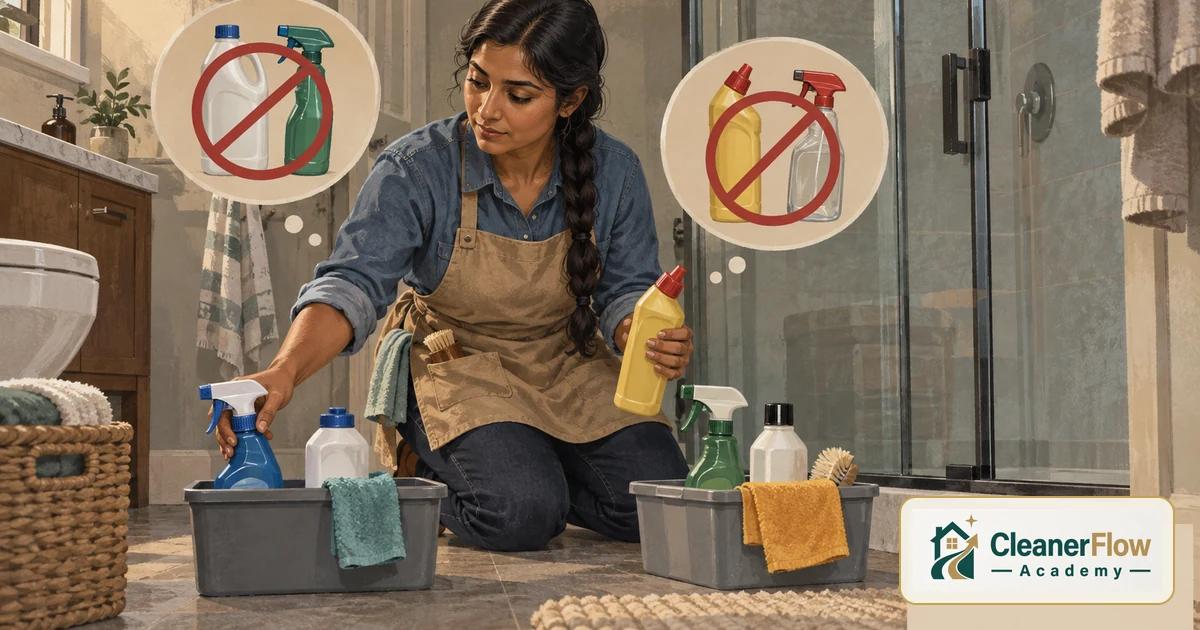
Never mix products
This is the most important chemical rule, so learn it by heart. Bleach and ammonia mixed together create a toxic gas that can damage your lungs. Bleach mixed with certain acids, including some tile and toilet-bowl cleaners, releases dangerous chlorine gas. You cannot always tell what is inside a product by its label, so the safe rule is simple: use one product at a time, rinse the surface before switching, and never combine two cleaners hoping for a stronger result. Stronger is not the goal. Safe and clean is the goal.
Give the room air
Many cleaners get headaches, dizziness, or a scratchy throat and blame being tired. Often it is the fumes. Open a window, turn on a fan, or leave a door open when you use strong products, especially in small spaces like bathrooms and closets. If you start to feel lightheaded, stop and step outside for fresh air. That feeling is a warning, not something to push through.
Protect your skin and eyes
Wear gloves. Repeated contact with cleaning products dries out and cracks your skin, and some products can cause chemical burns. A good pair of gloves is cheap and saves your hands over the years. Be careful when spraying above your head, like on a shower wall or a high mirror, because product can drip back into your eyes. When in doubt, wipe rather than spray up high. If anything gets in your eyes, rinse with clean water for several minutes right away.
Keep products in their right bottles
Never pour a cleaning product into an unmarked bottle, a water bottle, or a food container. It is dangerously easy to forget what is in it, and a client, a child, or a pet could reach it. Keep every product in its original labeled container, closed when you are not using it, and stored upright so it does not leak in your bag or caddy.
Know your products before you use them
Take a minute to read the label of anything new. It tells you what surfaces the product is safe for, whether you need to dilute it, and what to do if it touches your skin or eyes. Reading that label is not wasted time. It protects both you and the client's home.
Body Safety: This Work Is Physical
Cleaning is a workout that lasts for hours, day after day. The injuries here are not dramatic, they build up slowly, and they can end a career if you ignore them. Protecting your body is protecting your income.
Lift with your legs, not your back
When you move a full bucket, a heavy vacuum, or furniture to clean behind it, bend your knees and let your legs do the work. Keep the load close to your body. Do not twist your spine while carrying something heavy; turn your whole body with your feet instead. Your lower back is the first thing to go in this trade, and once it is hurt it is slow to heal.
Change your position often
Staying in one posture too long is what strains you. Do not stay bent over a tub or kneeling on a hard floor for a long stretch. Switch tasks, stand up, stretch your back, and roll your shoulders. Kneel on a pad or a folded towel to protect your knees. Small changes across the day add up to far less pain at night.
Protect your hands, wrists, and shoulders
Scrubbing, wringing, and repeating the same motion for hours can inflame your wrists and shoulders over time. Switch hands when you can. Use tools with comfortable handles. Let a good product and a little soaking time do some of the scrubbing for you instead of forcing it all with muscle. Working smart is not lazy; it is how you stay able to work for years.
Watch your footing
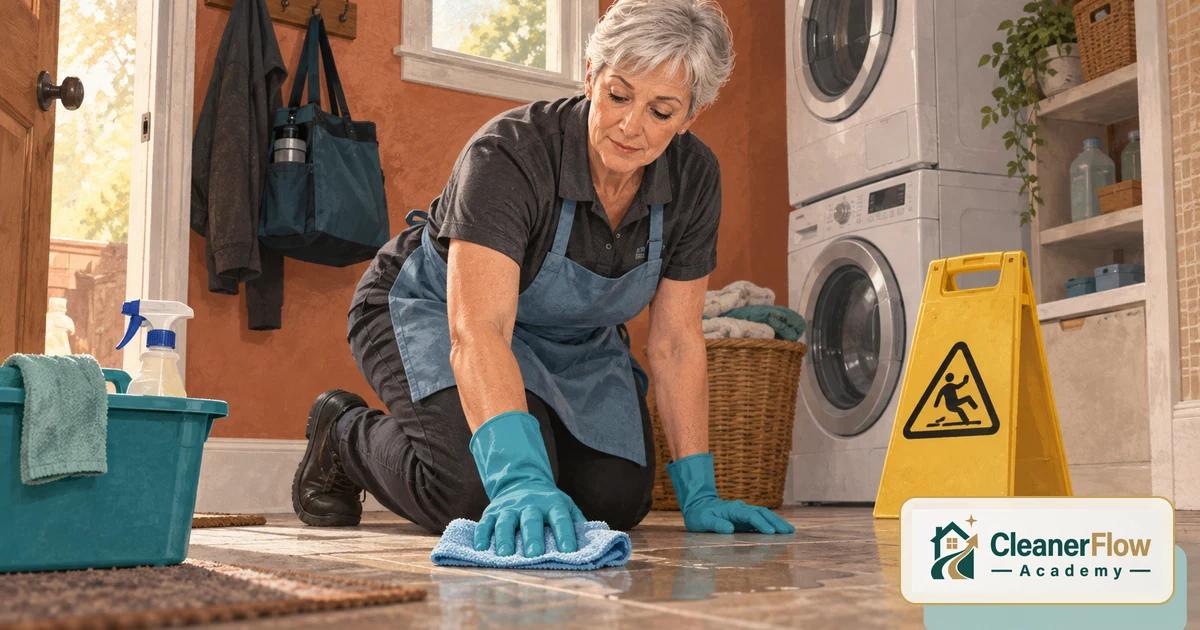
Wet floors are slippery, and a fall when you are alone is serious. Wear closed shoes with good grip, never socks or loose sandals. Dry a floor or warn yourself of a wet patch before you walk across it. Be extra careful on stairs, on tile, and when you step out of a tub you just cleaned. Use a proper step stool to reach high places, never a chair or the edge of a bathtub.
Take breaks and drink water
You are not a machine, and pushing through exhaustion is when accidents happen. Stop to drink water, especially in hot weather or a warm home. Eat something if you have a long day. A tired body moves clumsily and gets hurt. A short break is faster than a long recovery.
Personal Safety: You Are Often Alone With Strangers
This is the part people talk about least, but for many cleaners, especially women working alone, it matters most. You enter the private homes of people you do not know well. The great majority of clients are decent, but your safety comes first, always.
Tell someone where you are
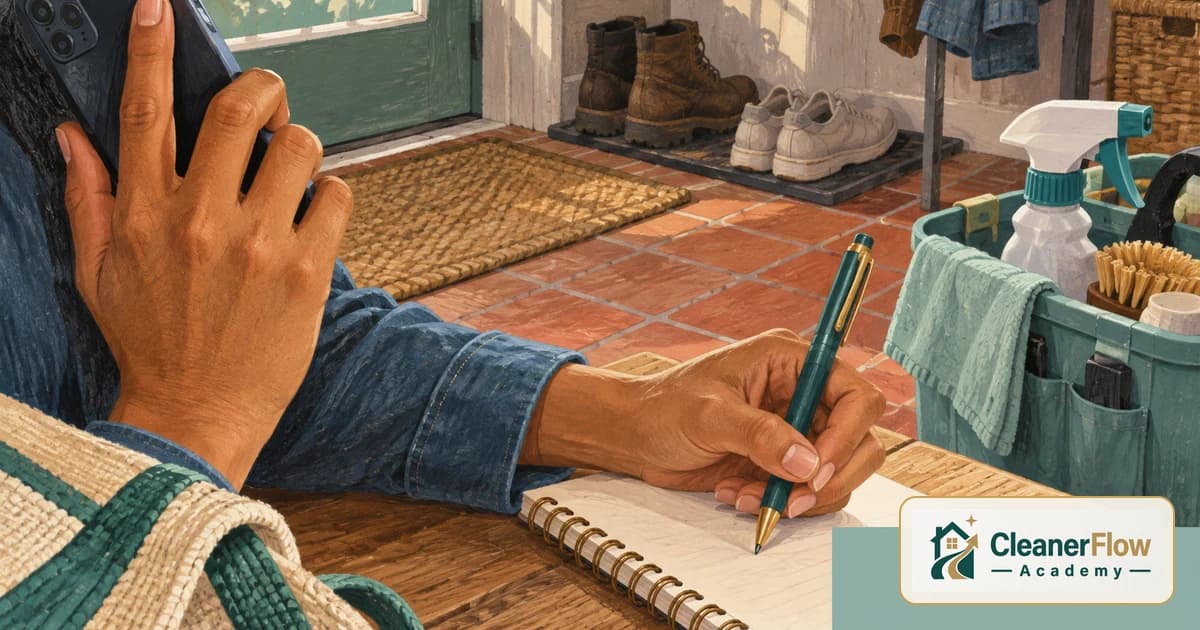
Before each job, make sure a family member or friend knows the address, the client's name, and roughly when you expect to finish. It costs you nothing and it means someone will notice if you do not check in. A simple message when you arrive and another when you leave is enough.
Keep your phone on you
Not in your bag in another room, on you, in your pocket. Your phone is your lifeline if something goes wrong, a fall, a medical problem, or a situation that feels unsafe. Keep it charged before you start the day.
Trust your instincts
If a situation feels wrong, it is wrong enough to act on. You do not owe anyone an explanation for protecting yourself. If a person in the home makes you uncomfortable, if you are asked to do something outside what you agreed to, or if something just feels off, you are allowed to step outside, call someone, or leave. No cleaning job is worth staying somewhere you feel unsafe.
Know the home's exits
When you arrive, take note of the doors. It sounds excessive, but knowing how you would leave quickly is simple peace of mind, and it takes only a moment of attention.
Be careful with what you share
You do not need to tell clients that you always work alone, that you have no one waiting for you, or your full personal schedule. Keep the relationship friendly but professional. Sharing too much personal detail with someone you barely know is a risk you can easily avoid.
Handle keys and access carefully
Many clients give you a key or a door code. Keep keys labeled in a way only you understand, never with the client's address attached, so a lost key cannot be traced to a home. Store codes somewhere private. This protects the client's home and, by extension, your reputation and your safety.
Build the Habit, and Keep Learning
Safety is not a one-time decision, it is a set of small habits you repeat until they are automatic. Gloves on. Window open. One product at a time. Phone in pocket. Someone knows where I am. Lift with the legs. None of these slow you down once they become second nature, and together they are what let you do this work for many years without the injury or the scare that forces someone else to stop.
The more you understand about the products you handle and the right way to do each task, the safer and more confident you become. If you want to build that foundation properly, CleanerFlow Academy offers a certification for house cleaners in your own language, right on your phone, and safety is a core part of what it covers. Learning the right way from the start is the surest way to protect yourself, your clients' homes, and the career you are building.
You take good care of other people's homes. Take at least as good care of yourself.
This week's post, in your inbox
One email a week, every Tuesday, with the new post from the blog.
You already clean well. Now you can prove it.
The 7 modules are free. The certificate, with a QR your client checks on the spot, proves what you already know how to do.
Other CleanerFlow apps
Your whole week in one place.
Homes, notes for every client, and who already paid, on your phone — even offline.
Cleaning jobs in your ZIP. See the quality score before you pay.
Every lead goes to 3 cleaners at most, and you get 14 days to dispute a dud.