Heat, Dehydration and Cleaning Homes With No Air Conditioning
 Academy Team November 16, 2026 8 min read
An empty house in summer becomes an oven, and nobody turns the air on for you. The signs of heat exhaustion, what to do right then, and how to ask without awkwardness.
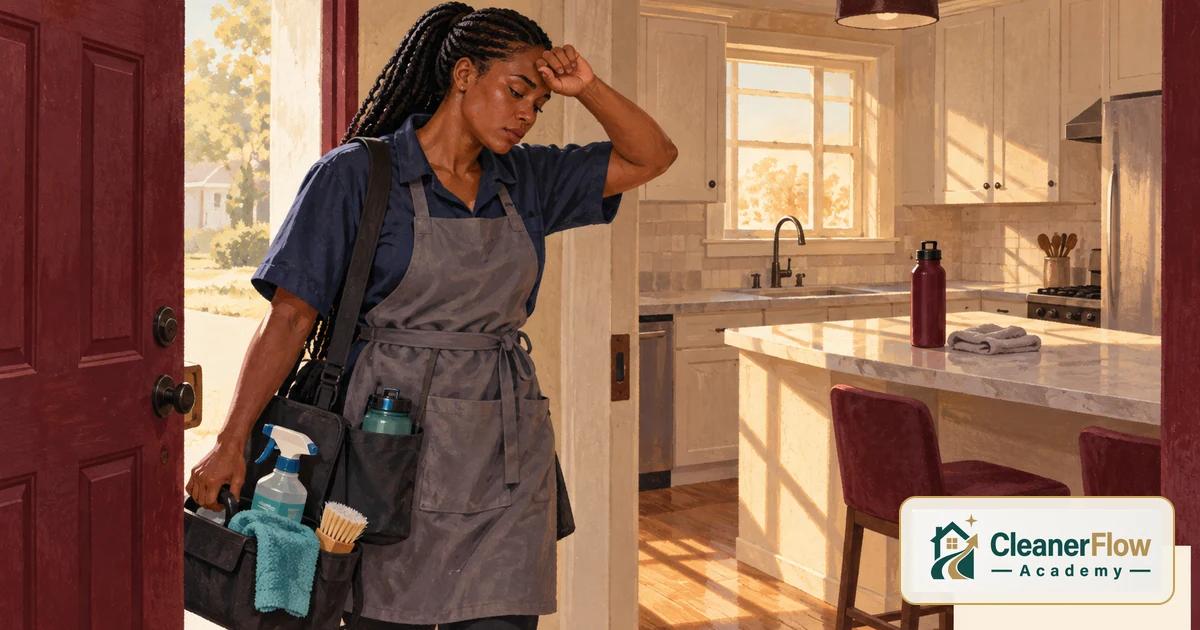
The Oven Nobody Sees
A closed house, in summer, with nobody inside for eight hours. The client turned the air off when she left, because she is not there. You arrive at noon and it is ten degrees hotter inside than out.
Then you vacuum, scrub, climb a ladder and carry a bucket for three hours, in a space with no circulation, using chemicals. That is not discomfort — it is a real health risk, and it kills people every summer in the United States.
Anyone working in someone else's home has one extra difficulty: it feels rude to ask for the air conditioning.
The Signs, in the Order They Appear
The body warns in two stages. Knowing the first is what prevents the second.
Heat exhaustion — stop and take care of yourself: - very heavy sweating, cool clammy skin - dizziness or vision darkening when you stand - nausea - headache - cramps in legs or abdomen - weakness, racing heart
Heat stroke — this is an emergency, call 911: - hot, DRY skin, no sweating - confusion, slurred speech, strange behavior - very high temperature - fainting
The distinction that saves lives: stopping sweating in the heat is an emergency sign, not an improvement. It is the body giving up on cooling itself.
What to Do Right Then
For heat exhaustion:
1. Stop working. Do not finish the room. 2. Get to the coolest place available — a car with the air on counts, and is sometimes the only one. 3. Drink water in steady sips. Not all at once. 4. Wet your neck, wrists and face. Wrists and neck cool the blood fastest. 5. Loosen your clothing, remove what you can. 6. Only go back if the symptoms are gone. If they are not gone in thirty minutes, get medical attention.
The common mistake is "just the bathroom left, I will finish". It was finishing the bathroom that had people collapse inside it, alone, with the door shut.
How Much to Drink, in Practice
The figure occupational safety agencies use: one cup (about 8 ounces) every 15 to 20 minutes in a hot environment. That is close to a quart an hour.
And do not wait for thirst. Thirst means the body is already behind.
Two things hurt more than they help: coffee and very sugary drinks. Water is better. On a long, sweaty day, alternating with something containing electrolytes helps, because sweat takes salt with it.
Bring your own bottle. Do not count on the house — many clients do not offer, and asking repeatedly makes you uncomfortable.
How to Organize a Hot Day
- Homes without air go in the morning. Schedule the air-conditioned ones for the afternoon.
- Start upstairs. Heat rises; the upper floor is the worst, and it is better faced early.
- Open the windows on arrival, before starting. Twenty minutes of circulation changes the room.
- Carry a small fan in the car. It costs twenty dollars, fits in the trunk, and makes more difference than any technique.
- Light, loose, pale clothing. Cotton or technical fabric, never black.
- A ten-minute break every hour, in shade or in the car. You recover the pace, you do not lose it.
The Phrases to Ask Without Awkwardness
That is the real block. And the key is the same as with other requests: frame it as service quality, not as your comfort.
Beforehand, at the quote:
> "Could you leave the air conditioning on before I arrive? It helps the floors dry faster and I can work quicker."
Which happens to be true: floors dry better and product evaporates less.
On the day, if it is shut up:
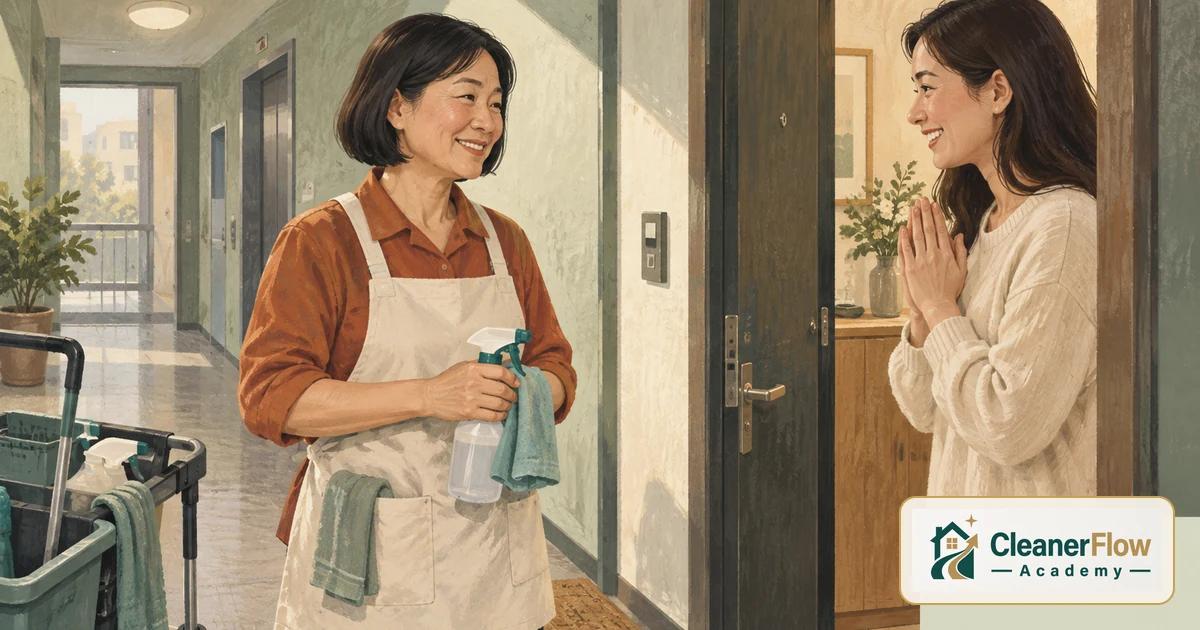
> "It is very hot in here today. Is it okay if I turn on the air or open the windows?"
Almost nobody says no. And whoever does is telling you something about the kind of client they are.
Chemicals in the Heat Are a Separate Problem
A hot, closed space concentrates vapor. The same product that is safe in a ventilated bathroom becomes an irritant in a 100-degree bathroom with the window shut.
- Open the window before applying, not after
- In a windowless bathroom, run the exhaust fan and leave the door open
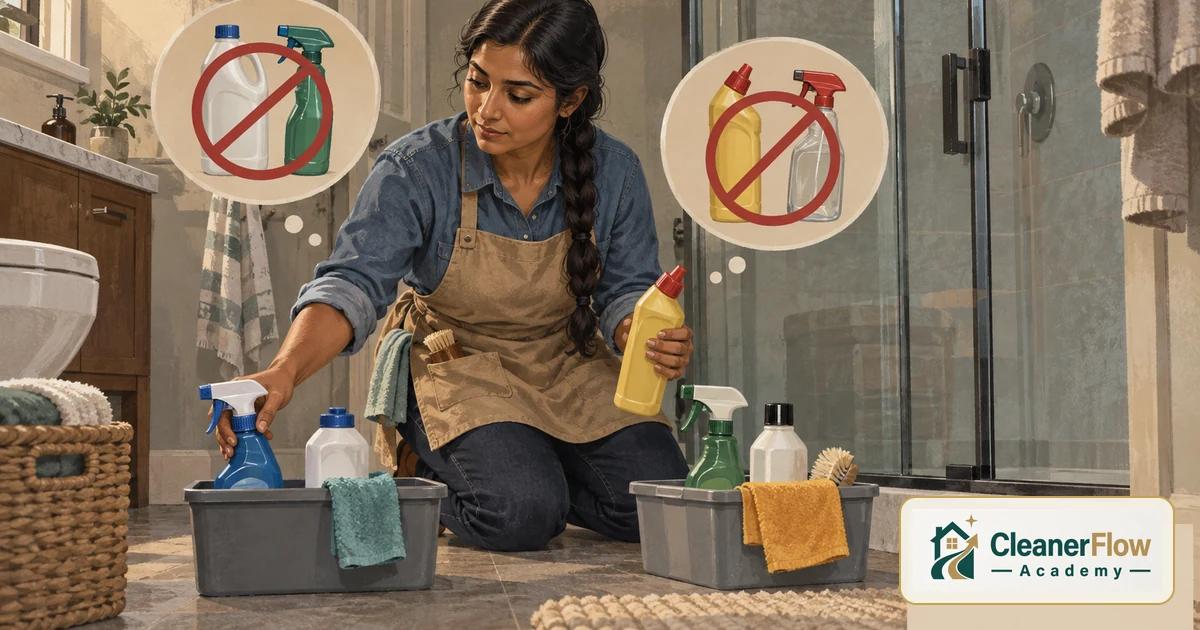
- Never use bleach together with anything containing ammonia — and in heat, the vapor is worse
- If your eyes or throat start to burn, leave the room. That is not fussiness, it is a warning
Who Is at Higher Risk
Worth knowing, without drama: pregnancy, high blood pressure, diabetes, heart conditions, and certain medications (diuretics, blood pressure medicine, some antihistamines) reduce the body's ability to cool itself.
If that is you, a hot day requires more breaks and more water than the person next to you — and that is not weakness, it is information.
The Calculation That Matters
One extra cleaning on a 105-degree day earns maybe $120. One emergency room visit for heat stroke costs far more than that, and takes you out of work for days.
No house is worth it. When your body warns you, stop — and reschedule. A good client understands; a client who does not just told you something cheaply.
This week's post, in your inbox
One email a week, every Tuesday, with the new post from the blog.
You already clean well. Now you can prove it.
The 7 modules are free. The certificate, with a QR your client checks on the spot, proves what you already know how to do.
Other CleanerFlow apps
Your whole week in one place.
Homes, notes for every client, and who already paid, on your phone — even offline.
Cleaning jobs in your ZIP. See the quality score before you pay.
Every lead goes to 3 cleaners at most, and you get 14 days to dispute a dud.